Presentation Training for Architects: Building the Skills Behind a Winning Design Pitch

Architects spend years learning to resolve complex problems on paper and in models. Far less time goes to presenting that thinking to a client, a committee, or a board that has ten minutes and a stack of competing firms. Presentation training closes that gap. It treats speaking as a design discipline with its own constraints, tools, and iteration cycle, and it gives architects a repeatable method rather than a talent they either have or lack.
Start With the Client's Decision
Most weak architectural presentations are organized around the firm's process: our history, our approach, our projects. Strong ones are organized around the decision the audience must make. Training begins by asking what the committee is trying to decide, what worries them, and what evidence would settle the worry. Once that is clear, the content of the talk becomes a filter. Anything that does not move the decision gets cut.
Structure the Story Before the Slides
Slides should be the last step. A good session builds the spoken argument first, with a clear opening position, three or four supporting points, and a close that asks for a specific outcome. Architects tend to be strong at spatial thinking, so a useful exercise is mapping the talk as a sequence of rooms the audience walks through. Each section has a purpose, a transition, and a way out.
Make the Visuals Carry the Weight
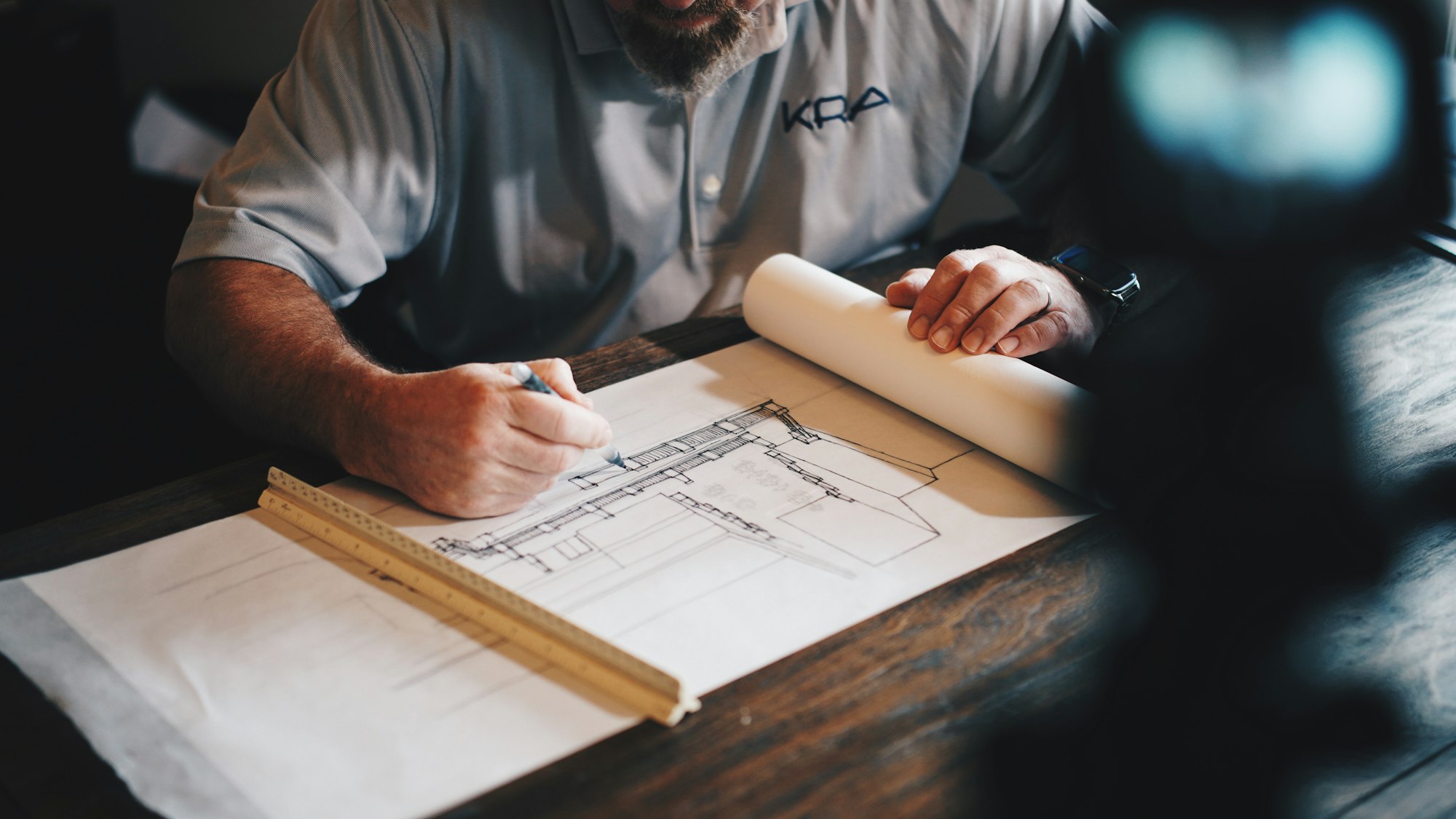
Renderings, diagrams, and plans are an architect's strongest asset in a presentation, but they are often buried in dense layouts. Training covers how to give one image the full screen, how to annotate a plan so the audience can follow it, and when to replace a paragraph of text with a single diagram. The aim is for the speaker to talk about the work while the visuals show it. A useful rule for a design pursuit is that every slide should answer a question the panel is likely to have. If a drawing does not do that, it can move to the appendix without any loss.
Practice Delivery the Way Athletes Practice
Delivery improves through repetition with feedback, not through reading advice. Effective training puts architects on their feet, records the run, and reviews pacing, eye contact, and filler words. Short drills on openings and transitions pay back quickly. Teams also rehearse handoffs between speakers, since interview panels notice when a team presents as separate individuals instead of one group. Firms that make rehearsal a standing part of every pursuit schedule see the gap between their strongest and weakest presenters narrow within a few months.
Prepare for the Questions
The question period often decides the interview. Training includes building a list of the hardest questions a panel could ask, from fee and schedule to team availability, then practicing short, direct answers. Speakers learn to answer first and elaborate second, to admit what is not yet decided, and to redirect to the project's strengths without dodging. Panels reward candor delivered with calm.
Fit the Training to the Firm
A principal presenting to a school board needs different skills from a designer walking a developer through a facade study. Good training adapts to the audiences each person actually faces, uses the firm's real pursuits as practice material, and sets a common standard the whole office can use. That shared standard reduces last-minute scrambling before each interview.
The Bottom Line
Presentation skill is learnable, and for architects it directly affects which projects the firm wins. Training that starts from the client's decision, builds the story first, uses visuals well, and rehearses with feedback gives a firm a lasting advantage. The design work still matters most. Presentation training makes sure it gets heard.